


Buying a perfume after a single quick sniff at a department store counter is one of the most common regrets in fragrance. The scent smells promising on a strip, but two hours later on your skin, it’s unrecognizable. Personalized scent discovery workshops reduce this mismatch by focusing on your lifestyle and emotional responses rather than impulse. This guide walks through each stage of guided scent discovery, from mindset and materials to blending, evaluating, and refining a fragrance that is genuinely yours. No guesswork. No regret purchases.
Table of Contents
- Preparing for your scent discovery journey
- Step-by-step guide to scent discovery
- Verifying and refining your signature blend
- The science and art behind scent creation
- A fresh perspective on scent discovery: Beyond the obvious
- Experience guided scent discovery with Scentorium
- Frequently asked questions
Key Takeaways
| Point | Details |
|---|---|
| Preparation matters | Starting your scent journey with the right mindset and materials leads to better results. |
| Follow a structured process | Step-by-step discovery produces personalized blends that outperform random perfume selection. |
| Refine for satisfaction | Expert guidance and multiple iterations help you find a blend that fits your lifestyle and emotions. |
| Artistry meets science | Understanding the art and chemistry of scent makes your fragrance journey richer and more rewarding. |
| Expert help enhances results | Guided workshops, discovery boxes, and professional advice yield higher satisfaction than solo buying. |
Preparing for your scent discovery journey
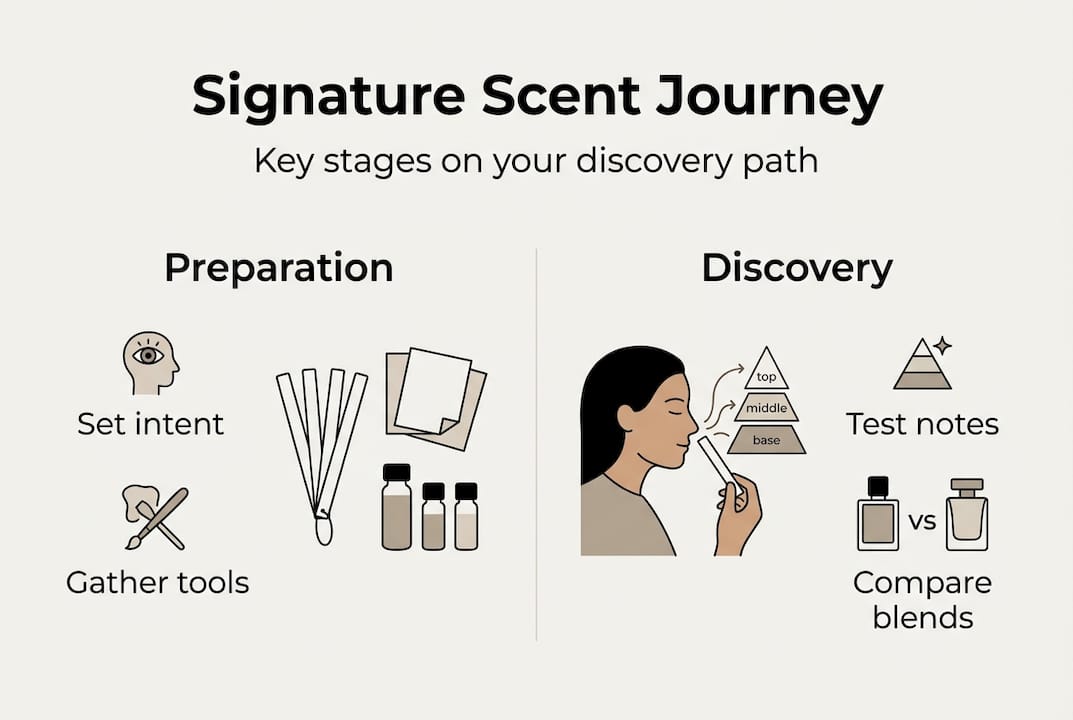
The right preparation separates a productive scent session from an overwhelming one. Before you start testing anything, the most useful thing you can bring is a clear sense of what you want a fragrance to do for you. Does it need to work in a professional setting? Do you prefer something that shifts from day to evening? These questions matter more than you might expect.
Here is what you will need for a successful session:
- Facettes (single scent elements used for evaluating individual notes)
- Scent strips, labeled and organized by note category
- A notebook for recording reactions and combinations
- Access to a bespoke perfume experience, a discovery box, or an online quiz
- Coffee beans or plain water to reset your palate between tests
Discovery workshops use facettes and blend top, middle, and base notes for custom results. This structured approach is what separates guided discovery from random sampling.
| Method | Personalization | Cost range | Best for |
|---|---|---|---|
| In-person workshop | High | $80 to $300+ | Deep customization |
| Discovery Box Poécile | Medium to high | $30 to $100 | At-home exploration |
| Online quiz | Low to medium | Free to $20 | Starting point only |
Pro Tip: Before any session, write down three words that describe how you want to feel when wearing the scent. This anchors your choices and prevents you from drifting toward scents that are technically interesting but emotionally wrong for you. You can also subscribe to the Scentorium newsletter for curated guidance before your first session.
Step-by-step guide to scent discovery
Now that you are prepared, here is the structured sequence used in guided scent discovery sessions.
- Identify your facettes. Start by testing individual scent elements across categories: citrus, floral, woody, oriental, and fresh. Note which ones you respond to positively without overthinking it.
- Select your top notes. These are the first impression scents, lasting 15 to 30 minutes. Choose ones that feel immediately right, not just interesting.
- Choose your middle notes. The heart of the fragrance. These last 2 to 4 hours and define the character of the blend. Take more time here.
- Pick your base notes. These anchor the scent and linger for hours. Woody, musky, and resinous elements are common choices.
- Blend and evaluate. Combine your selections on a strip first, then on skin. The bespoke perfume method involves testing how notes interact rather than how they smell individually.
- Iterate. Custom workshops guide participants through 1 to 3 iterations, ending with a 5 to 30ml personalized blend.
| Session stage | Typical duration | Output |
|---|---|---|
| Facette evaluation | 30 to 45 minutes | Shortlist of preferred notes |
| Blending and testing | 60 to 90 minutes | 1 to 3 trial blends |
| Final refinement | 30 minutes | 5 to 30ml final blend |
Tools like the Toouch Discovery Set and the Scent Locket make it easier to carry and compare blends during this process. For a complete ready-to-wear reference point, the Shire Eau de Toilette is a useful benchmark for understanding how a balanced blend feels on skin.
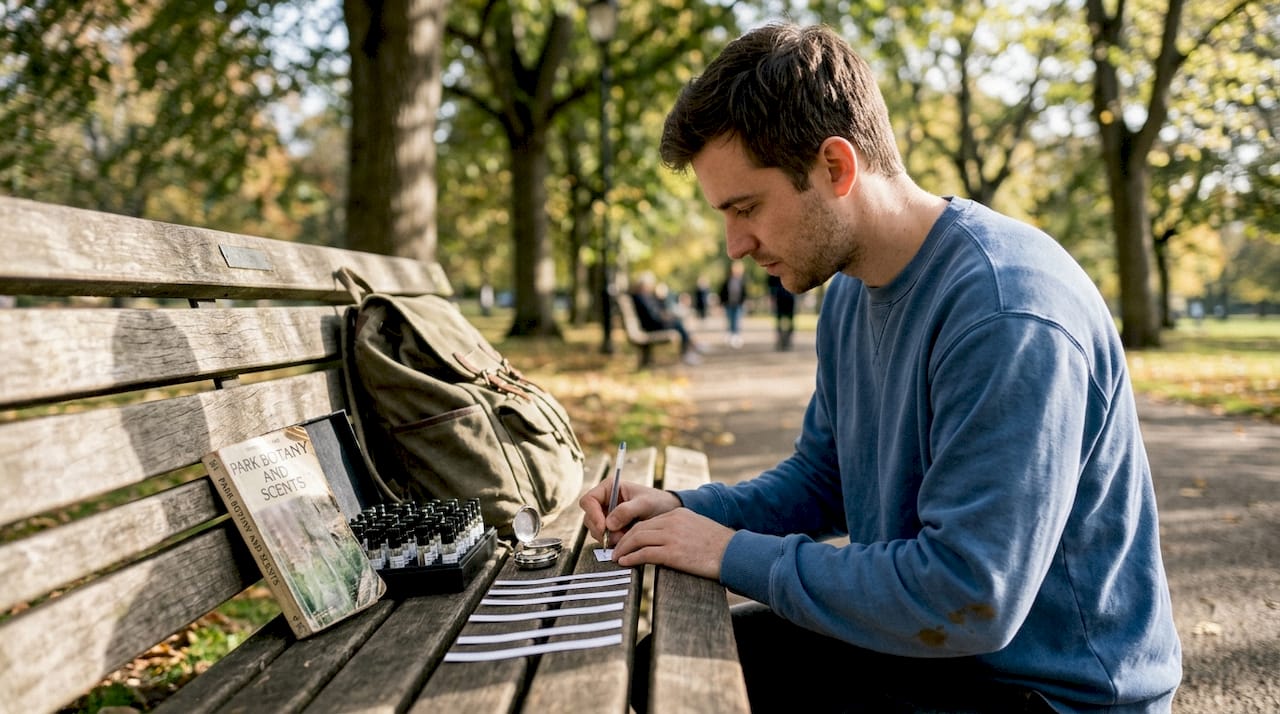
Pro Tip: Keep each scent strip labeled with the note name and the time you tested it. Scent memory fades fast, and unlabeled strips create confusion when you return to compare options after 20 minutes.
Verifying and refining your signature blend
Once you have a blend, the work is not finished. Evaluating a fragrance properly requires time and attention to how it evolves.
Here is how to assess your blend accurately:
- Test on skin, not just strips. Body chemistry changes how a fragrance smells. What works on paper may not work on you.
- Observe the dry-down. The dry-down is the phase after the top notes fade, usually 30 to 60 minutes after application. This is where the true character of the blend appears.
- Test at different times of day. Skin temperature, humidity, and even diet affect scent performance. A blend that smells perfect in the morning may feel heavy by evening.
- Check for balance. If one note dominates, the blend is off. A well-constructed fragrance should feel like a single coherent scent, not a collection of separate elements.
Common mistakes to avoid:
- Overloading base notes, which makes the blend feel heavy and one-dimensional
- Choosing top notes that clash with your base, creating a disjointed opening
- Skipping the dry-down evaluation entirely
“AI, quizzes, and scent sommeliers produce more satisfying, personalized results by centering lifestyle and emotional fit in the process.”
For additional guided blending advice, Scentorium provides expert resources to help you refine your choices at every stage.
Pro Tip: Wait at least 24 hours before making a final decision on a blend. First impressions are useful, but how a scent feels after a full day of wear is the real test.
The science and art behind scent creation
To fully appreciate what you are creating, it helps to understand what makes scent work at a deeper level.
Fragrance is built on a three-layer structure: top, middle, and base notes. Each layer has a different molecular weight, which determines how quickly it evaporates and how long it lasts. Top notes are the lightest and most volatile. Base notes are the heaviest and most persistent. The skill in blending is making these layers feel continuous rather than sequential.
Facettes interact in ways that are not always predictable. A woody base note can amplify a floral middle note, making it smell richer. A citrus top note can make an oriental base feel fresher and more wearable. Workshops blend top-middle-base notes specifically to manage these interactions and create a coherent result.
Emotional resonance is equally important. Scent is processed by the limbic system, the part of the brain linked to memory and emotion. This is why certain fragrances feel immediately familiar or comforting. Bespoke creation, as covered in bespoke perfumery insights, accounts for this by asking about emotional associations, not just scent preferences.
Key differences between mass-market and bespoke creation:
- Mass-market: Designed for broad appeal, optimized for shelf impact, limited customization
- Bespoke: Designed for one person, optimized for skin chemistry and lifestyle, fully adjustable
- Discovery box experience: A middle path, like the Discovery Box Poécile, that brings structured exploration to an at-home format
The artistry is in knowing when to stop adjusting. Over-blending is a real risk. At some point, the fragrance either works or it does not.
A fresh perspective on scent discovery: Beyond the obvious
Most guides focus on the technical steps. What they miss is the emotional logic behind why guided discovery works better than blind buying.
Blind buying is not just inefficient. It treats fragrance as a product category rather than a personal expression. When you pick a scent based on a brand name or a trending note, you are optimizing for someone else’s preferences. That is the core problem.
Personalized experiences driven by emotion and lifestyle deliver higher satisfaction because they start from the right question: what do you need this scent to do for you?
The contrarian insight most people miss: more iterations are not a sign of confusion. They are a sign of precision. Each adjustment narrows the gap between what you think you want and what actually fits your life. Rushing to a final blend after one test is the real mistake.
For luxury scent advice and curated tools that support this kind of deliberate discovery, the resources are available. The process rewards patience.
Experience guided scent discovery with Scentorium
Guided discovery does not have to mean booking a workshop in another city. Scentorium offers structured tools for exploring and identifying your signature scent from wherever you are.
The Discovery Box Poécile provides a curated selection of niche fragrances designed for systematic evaluation. The Scent Locket lets you carry and compare blends throughout the day, making real-world testing practical. For those ready to go further, Scentorium workshops connect you with expert guidance at every stage of the blending process. Each option is designed to move you from uncertainty to a fragrance that is genuinely yours.
Frequently asked questions
How long does a guided scent workshop typically last?
Most workshops take 2 to 3 hours from learning facettes to blending your custom scent, with time built in for iteration and evaluation.
What is a facette in perfume creation?
A facette is a single scent element used for evaluating and blending fragrances. Facettes form the building blocks of custom perfumes in guided discovery workshops.
Is it better to discover scents in-person or online?
Both methods can work, but in-person workshops and guided online tools provide more personalization and reduce mismatches compared to unassisted browsing.
How do I know if my custom blend fits me?
Test the blend on your skin and note how it evolves throughout the day. Emotion and lifestyle should guide the final evaluation, not just the initial impression.
Are guided scent discovery methods only for luxury perfumes?
While common in high-end fragrance, guided discovery benefits any enthusiast seeking a personal, satisfying scent experience regardless of price point.