


Not every luxury perfume is created equal. The most exclusive fragrances rarely appear on department store shelves, and that gap between what’s widely available and what’s truly rare is exactly where private collection scents live. A “private collection scent” refers to fragrances from luxury brands’ exclusive lines, positioned above their standard designer offerings. These are not simply expensive bottles. They represent a different category entirely, defined by rare materials, limited production, and deliberate artistic intent. This article breaks down what separates private collection fragrances from everything else, how they’re made, and what collectors should know before investing.
Table of Contents
- Defining private collection scents
- Ingredients, concentrations, and packaging: What makes a collection ‘private’
- Creative freedom and storytelling: Inspiration behind exclusive scents
- Performance, investment, and collecting tips
- Our perspective: Beyond hype, what connoisseurs should really seek
- Discover scents worth collecting
- Frequently asked questions
Key Takeaways
| Point | Details |
|---|---|
| Exclusive artistry | Private collection scents deliver unique stories and rare materials unavailable in mainstream perfumes. |
| Collector value | Provenance, limited edition numbers, and perfumer signatures make these fragrances prized by collectors. |
| Performance varies | Not all private collection scents outperform mainstream options despite higher prices and exclusivity. |
| Discernment required | Collectors should critically evaluate ingredients, story, and authenticity to avoid marketing hype. |
| Proper storage matters | Storing fragrances in cool, dark conditions helps preserve their investment value and olfactory quality. |
Defining private collection scents
The term “private collection” gets used loosely in fragrance marketing, so it helps to anchor it with specifics. Private collection fragrances come from luxury brands’ exclusive lines such as Armani Privé, Estée Lauder Private Collection, Miller Harris Private Collection, or Molinard Collection Privée. These lines sit above a brand’s standard designer range, targeting buyers who want something beyond what’s accessible to the general public.
The distinction matters because it shapes everything from ingredient sourcing to distribution. Private collection lines are typically sold through select boutiques, brand flagships, or curated online retailers rather than mass-market channels. Availability is deliberately restricted.
Where things get more complex is at the boundary between private collections and niche perfumery. Luxury brands launching haute couture lines blur the edge cases with niche perfumery as they pursue exclusivity beyond designer scents. The result is a fragrance landscape where the categories overlap more than they used to.
Here is a direct comparison across the three main categories:
| Feature | Mainstream designer | Niche | Private collection |
|---|---|---|---|
| Distribution | Mass retail | Select boutiques | Brand flagships, curated retail |
| Ingredient quality | Standard | High | Exceptional, often rare |
| Oil concentration | 5-15% | 15-30% | 20-40% |
| Production volume | High | Limited | Very limited or numbered |
| Price range | $50-$150 | $150-$400 | $300-$1,000+ |
Key distinctions at a glance:
- Mainstream designer: Broad appeal, consistent formulas, wide availability
- Niche: Independent houses, artistic focus, limited retail presence
- Private collection: Luxury brand sub-line, rare materials, restricted access, often numbered
Understanding these categories helps you evaluate what you’re actually buying rather than relying on marketing language alone.
Ingredients, concentrations, and packaging: What makes a collection ‘private’
Now that we know what private collection fragrances are, it’s crucial to understand why they’re valued: the ingredients, concentrations, and presentation.
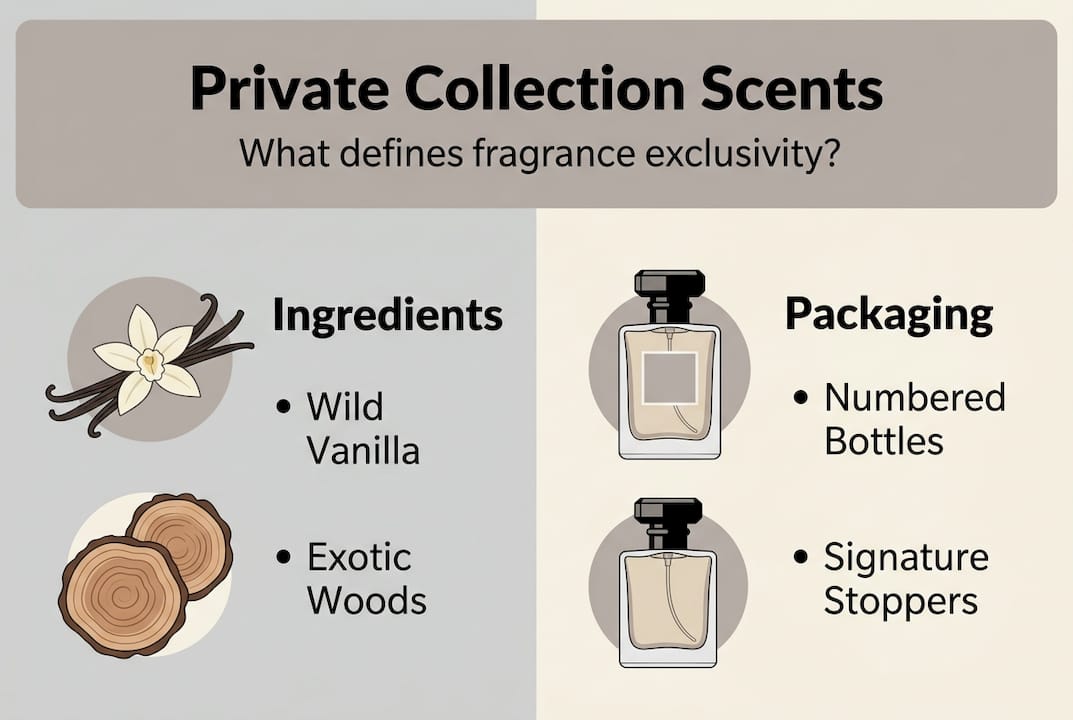
These lines use rarer ingredients like wild vanilla, exotic sandalwood, higher concentrations, superior packaging, and limited production compared to mainstream lines. That combination drives both the sensory experience and the price point.
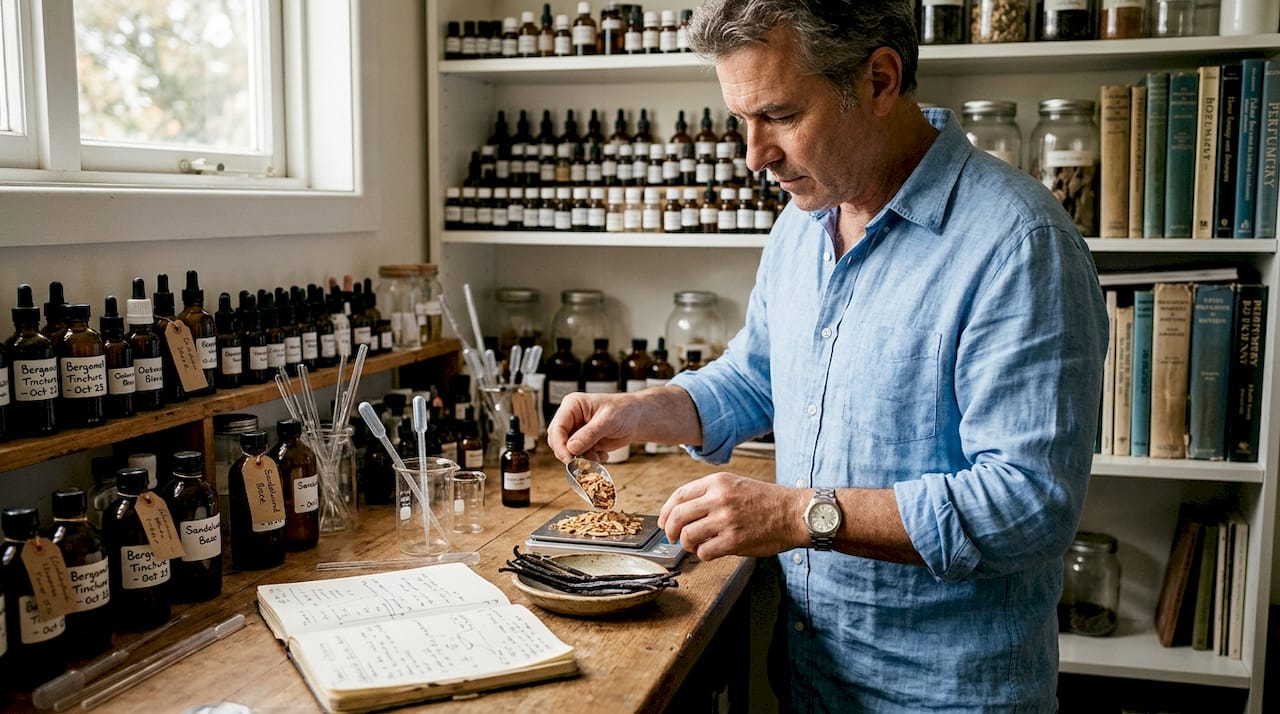
Oil concentration is one of the most measurable differences. Standard eau de toilette formulas sit around 5-10% fragrance oil. Private collection formats, particularly extrait de parfum versions, can reach 30-40%. Higher concentration means longer wear, more complex dry-down, and a richer initial impression. A mainstream scent might last 4-6 hours. A well-formulated private collection extrait can project for 10-12 hours with proper application.
Here is how concentration levels compare across formats:
| Format | Typical oil concentration | Average longevity |
|---|---|---|
| Eau de cologne | 2-5% | 2-3 hours |
| Eau de toilette | 5-15% | 4-6 hours |
| Eau de parfum | 15-20% | 6-8 hours |
| Extrait de parfum | 20-40% | 8-12+ hours |
Packaging in private collections is not decorative afterthought. Hand-numbered bottles, signature stoppers, weighted glass, and branded cases are standard. These details signal limited production and add to resale and collector value. Some houses number each bottle individually, making every piece traceable.
For a concrete example of how concentration and rare materials combine in a single product, Tabac Sura Extrait demonstrates the extrait format with artisanal sourcing.
Ingredient highlights common in private collections:
- Wild-harvested oud and agarwood
- Vintage or aged base materials
- Natural absolutes (jasmine, rose, iris)
- Rare resins and balsams
- Single-origin vanilla and tobacco
Pro Tip: When evaluating a private collection fragrance, check whether the house discloses the perfumer’s name and ingredient sourcing. Transparency on both points is a reliable signal of genuine artisanal production rather than marketing positioning.
Creative freedom and storytelling: Inspiration behind exclusive scents
Beyond ingredients and exclusivity, what truly sets these fragrances apart is the artistry and personal story behind each creation.
Perfumers are given creative freedom to incorporate personal influences and memories, with inspiration drawn from nature, travel, and cultures. This is a meaningful departure from how mainstream fragrances are developed, where commercial briefs and focus groups shape the final formula.
Armani Privé’s Precious Lands collection is a clear example. Each fragrance in that line maps to a specific geographic region, with ingredient sourcing and scent profiles tied directly to place. The result is a series of fragrances that function almost like olfactory documents of specific landscapes.
Common sources of inspiration for private collection scents:
- Personal memory: Childhood homes, family recipes, seasonal rituals
- Geographic regions: Specific landscapes, climates, local botanicals
- Cultural heritage: Traditional practices, artisan crafts, historical periods
- Natural phenomena: Weather events, seasonal transitions, rare flora
- Material obsession: A single rare ingredient explored across multiple compositions
“The best private collection fragrances are not products. They are arguments for a particular way of experiencing the world. The perfumer’s job is to make that argument without words.”
This storytelling dimension is what separates a genuinely collectible fragrance from one that simply carries an exclusive label. You can explore how this narrative approach translates into wearable form through the Discovery Box Poécile, which presents a curated selection built around a cohesive creative concept.
For collectors who want to carry a scent reference point, the Scent Locket accessory offers a functional way to keep a sample close. Staying informed about new releases and creative directions is also straightforward through newsletter insights. If you want to see how regional inspiration translates into a full composition, the Shire Eau de Toilette is a useful reference point.
Performance, investment, and collecting tips
Artistry and inspiration drive value, but real-world performance and smart collecting are just as critical for connoisseurs.
The honest reality is that not every private collection scent offers superior longevity or uniqueness; some may not live up to hype. Exclusive branding does not guarantee exceptional performance. Some private collection releases are reformulated versions of older compositions, or they use the same base materials as the brand’s standard line with minor adjustments. Knowing this protects you from paying a premium for marketing rather than substance.
For collectors focused on investment value, prioritize provenance, limited numbering, and perfumer signature and store in cool conditions to preserve the fragrance over time. These three factors consistently separate collectible pieces from those that simply carry a high price tag.
Steps for proper storage and long-term preservation:
- Store bottles away from direct sunlight, which degrades fragrance compounds
- Keep in a cool, stable environment, ideally between 60-70°F (15-21°C)
- Avoid humidity, which can affect both the juice and the packaging
- Keep original packaging intact, as it protects from light and temperature fluctuation
- Limit air exposure by keeping bottles sealed when not in use
- Document purchase provenance, including retailer, date, and batch number
Pro Tip: Before purchasing a private collection fragrance as an investment, verify the perfumer’s signature on the bottle or accompanying documentation. Unsigned releases from a house that normally signs their work can indicate a secondary line rather than a true private collection piece.
Evaluating whether a private collection scent is worth the price requires testing it on skin, not just on a strip. Concentration and rare materials behave differently across skin chemistry, and a fragrance that reads as exceptional in the bottle may perform differently on you specifically.
Our perspective: Beyond hype, what connoisseurs should really seek
With these realities in mind, here is a perspective worth considering for fragrance enthusiasts and collectors.
Private collection scents offer artisanal-like experiences with rare materials and storytelling, but demand discernment as marketing may exceed actual uniqueness. That gap between marketing and reality is where most collectors make expensive mistakes.
The collectors who build genuinely valuable and personally meaningful collections are not chasing rarity for its own sake. They prioritize three things: provenance (knowing exactly where a piece comes from and who made it), craftsmanship (evidence of genuine artisanal process rather than scaled production), and personal connection (whether the scent actually resonates with their own sensory experience).
Rarity alone is not a reliable quality signal. A numbered bottle from a house that produces 50,000 units of a “limited” release is not the same as a genuinely small-batch composition from a perfumer working with a single harvest of a rare material. Learning to tell the difference is the actual skill that separates serious collectors from buyers responding to marketing.
The most meaningful private collection pieces are the ones that would still be worth owning even if no one else knew about them.
Discover scents worth collecting
If you are ready to seek out a truly unique scent experience, here is how Scentorium can help.
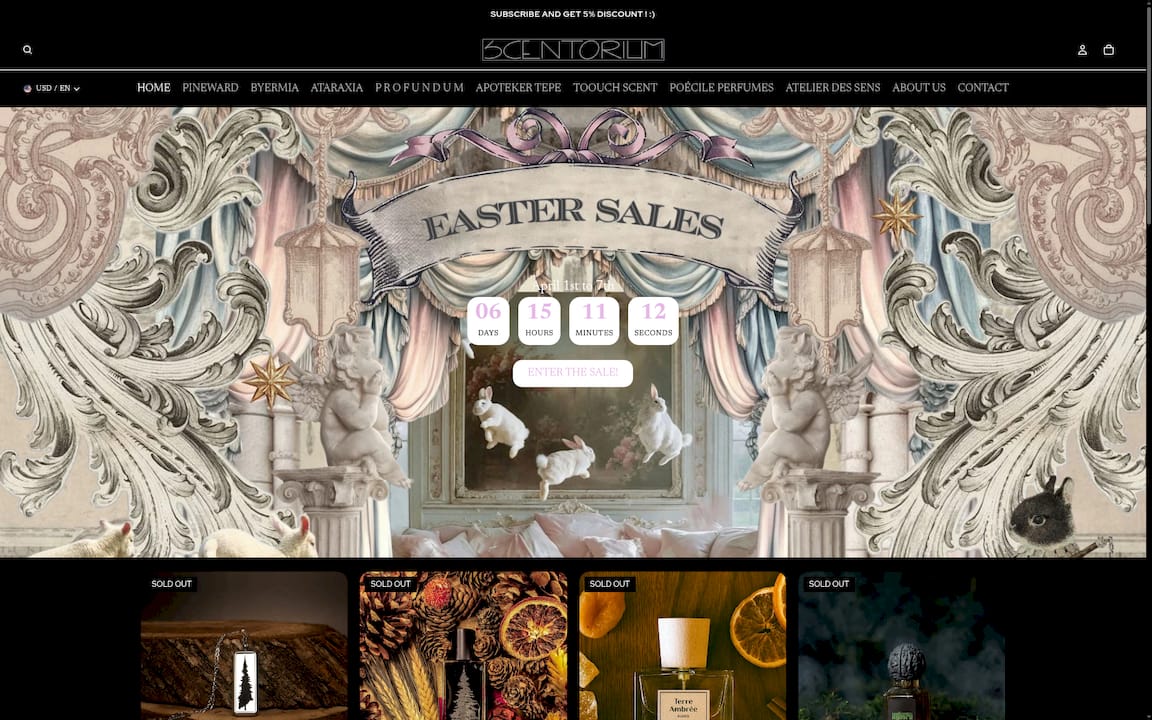
Scentorium offers a curated selection of handcrafted, exclusive fragrances selected for collectors who value artistry and provenance over mainstream availability. The Discovery Box Poécile is a practical starting point for exploring a range of private collection-style compositions before committing to a full bottle. For broader browsing across the full catalog of niche and artisanal releases, the Scentorium portal provides direct access to current collections, limited editions, and curated accessories. Each product listing includes detailed ingredient and perfumer information to support informed collecting decisions.
Frequently asked questions
What distinguishes a private collection scent from a niche fragrance?
Private collection scents are exclusive sub-lines from established luxury brands, while niche fragrances typically originate from independent houses focused on artistic composition. Luxury brands launching haute couture lines have blurred this boundary in recent years, but the brand origin remains the primary distinction.
Why are private collection scents more expensive than designer perfumes?
Higher costs reflect rare ingredient sourcing, elevated oil concentrations, limited production runs, and luxury packaging. Rarer ingredients like wild vanilla and exotic sandalwood, combined with restricted distribution, drive both production cost and market price.
Are private collection fragrances always better performing?
No. Not every private collection scent offers superior longevity or uniqueness; performance varies and some releases do not justify their exclusivity claims. Always test on skin before purchasing.
How should collectors store private collection fragrances?
Cool, dark, and stable conditions are the standard. Store in cool conditions away from sunlight and humidity to preserve both the fragrance composition and the packaging’s collector value.
What factors make a private collection scent a good investment?
Provenance, limited numbering, and perfumer signature are the three primary investment indicators, alongside intact original packaging and documented purchase history.