


TL;DR:
- Fragrance families help collectors organize scents based on dominant notes and characteristics.
- Floral collections offer versatility, from single-note soliflores to complex bouquet blends.
- Building a collection involves balancing emotional response, personal style, and understanding perfume classifications.
Navigating perfume collections is one of the most rewarding pursuits in luxury culture, yet the sheer variety of artisanal offerings can feel overwhelming. Fragrance families classify scents based on dominant notes and characteristics, giving collectors a reliable framework to organize their acquisitions. Whether you are drawn to luminous florals, brooding orientals, or crisp citrus accords, understanding these core categories helps you build a collection with intention. This guide breaks down the main perfume collection types, compares their defining traits, and offers practical strategies for curating a set that reflects your personal taste and lifestyle.
Table of Contents
- How fragrance families shape perfume collections
- Floral collections: From classic roses to innovative blends
- Woody and oriental: Deep, lasting signature collections
- Fresh, citrus, and aquatic: Modern vibrancy and versatility
- Comparison: Choosing the right collection type for your style
- The collector’s mindset: Beyond categories and into craftsmanship
- Curate your artisanal perfume collection with Scentorium
- Frequently asked questions
Key Takeaways
| Point | Details |
|---|---|
| Fragrance families matter | Understanding the main scent families is key to building a diverse and satisfying collection. |
| Personal fit over rules | Experienced collectors value emotional resonance and uniqueness more than strict classification systems. |
| Sample before you invest | Discovery sets and samplers let you experience a range of styles before committing to full bottles. |
| Storage preserves quality | Properly storing perfumes protects their scent and longevity, maximizing collection value. |
| All families have value | Floral, woody, oriental, and fresh/aquatic collections each offer something special for luxury enthusiasts. |
How fragrance families shape perfume collections
Fragrance families are the foundational system collectors use to categorize, compare, and curate scents. Think of them as a map: without one, you are browsing blind. With one, every acquisition has context.
Fragrance families classify scents based on dominant notes and characteristics, such as Floral, Fresh/Citrus/Aquatic, Woody, and Oriental/Amber/Gourmand. The most widely referenced model is Michael Edwards’ Fragrance Wheel, which organizes perfumes into four primary families with multiple subfamilies branching outward. Some systems use five families, adding a dedicated Fougère category. For collectors, the practical difference between these models is minimal. What matters is using a consistent framework to spot gaps and patterns in a growing collection.
Subfamilies add important nuance. Chypre, for example, blends citrus top notes with oakmoss and labdanum, producing a structured, mossy drydown that sits between Floral and Woody on the wheel. Fougère, built around lavender, coumarin, and oakmoss, is the backbone of many classic masculine releases. These subfamilies are where artisan houses often innovate most aggressively.
For practical reference, here are the key features that distinguish each main family:
- Floral: Dominant flower notes, ranging from single-note soliflores to complex bouquets
- Fresh/Citrus/Aquatic: Light, clean, energetic profiles with high volatility and short to medium longevity
- Woody: Warm, grounding base notes including sandalwood, cedarwood, and vetiver
- Oriental/Amber/Gourmand: Rich, resinous, and sweet profiles with strong sillage and long wear
“The most useful thing a collector can do is smell widely before committing to a family. Emotional response, not theory, should guide the final decision.”
You can explore sample fragrance families through curated discovery sets, or pair your collection with fragrance accessories for a complete sensory experience. For detailed family descriptions, a structured reference guide is a practical starting point.
Floral collections: From classic roses to innovative blends
Floral is one of the main perfume families, prized for its range from single-note soliflores to complex mixed-bouquet fragrances. For collectors, floral perfumes offer the widest spectrum of variation within a single family, making them both accessible and endlessly interesting.
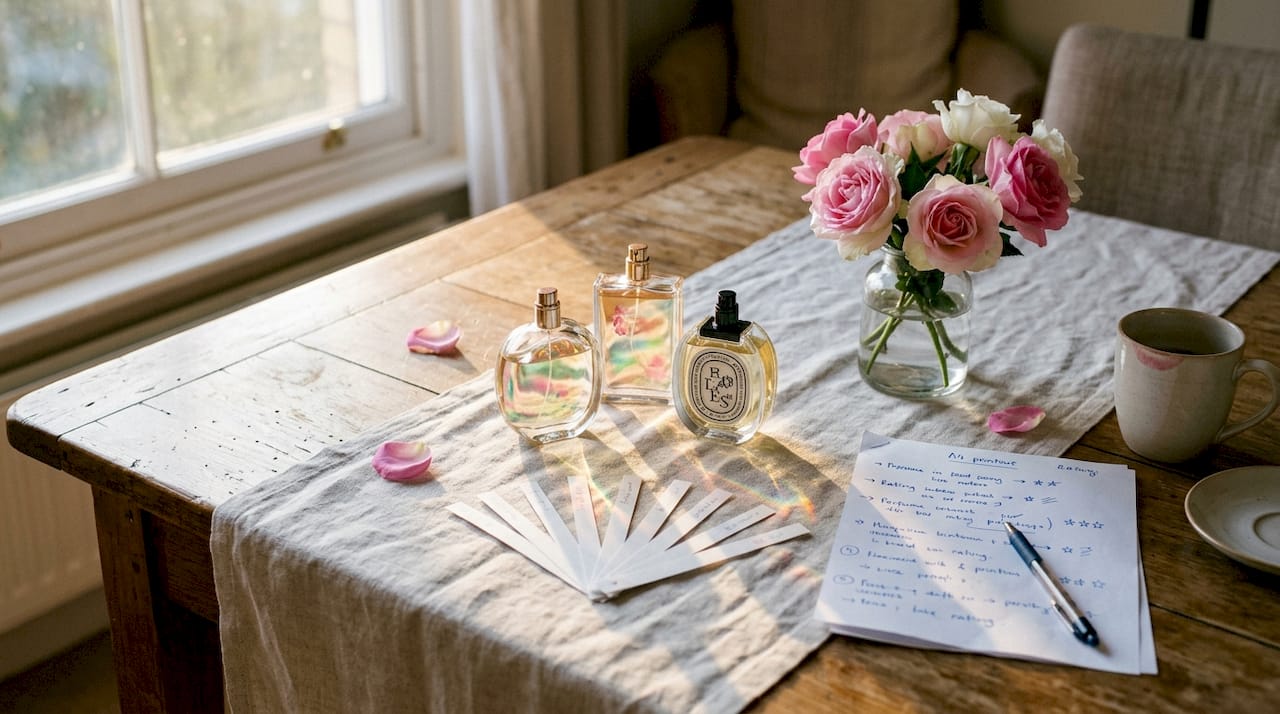
Soliflores focus on one flower rendered with precision. Rose, jasmine, and tuberose are the classic choices, but niche houses have expanded the palette to include osmanthus, magnolia, and even the elusive scent of lily of the valley. Bouquet florals layer multiple flowers to create a more complex, shifting accord. Green floral hybrids add vegetal or herbal notes to the mix, producing something fresher and less conventional.
Curating a floral collection works best when you establish a theme early. Some collectors focus on a single flower across multiple interpretations, comparing how different houses treat the same raw material. Others build variety, pairing a classic rose soliflore with a modern green floral and an avant-garde abstract. Both strategies are valid.
Key notes and blending partners in floral perfumes include:
- Top notes: Bergamot, green leaves, aldehydes, light citrus
- Heart notes: Rose, jasmine, iris, peony, ylang-ylang, tuberose
- Base notes: Musk, sandalwood, white woods, soft amber
For a strong starting point in artisanal floral collecting, the iris floral extrait is a precise example of how niche houses handle a single note with depth and restraint. More exploring floral family options are available through dedicated fragrance guides.
Pro Tip: Store floral perfumes upright in a cool, dark drawer or cabinet. Heat and UV exposure degrade the top notes fastest, which is exactly where a floral’s initial vibrancy lives.
Woody and oriental: Deep, lasting signature collections
While florals evoke brightness and romance, woody and oriental perfumes offer a wholly different, evocative foundation for collectors. These families reward patience. They open slowly, evolve over hours, and leave a lasting impression.
Woody and Oriental are major families in high-end collections, often featuring notes like sandalwood, patchouli, amber, and vanilla. The distinction between the two is worth knowing. Woody fragrances center on dry, earthy, or smoky base materials: cedarwood, vetiver, oud, and guaiac wood. Oriental fragrances lean warmer and sweeter, built on resins, spices, and balsams. Gourmand is a subset of oriental, pushing into edible territory with notes like vanilla, tonka bean, and dark chocolate.
Signature notes to look for in this segment:
- Woody: Oud, sandalwood, cedarwood, vetiver, smoke, incense
- Oriental/Amber: Labdanum, benzoin, myrrh, amber accord, cardamom
- Gourmand: Vanilla, tonka bean, praline, coffee, tobacco
“Layering a dry woody base with a warm oriental heart creates a signature that is difficult to replicate and impossible to forget.”
Layering is a practical strategy in this category. A dry, smoky oud can be grounded further with a resinous amber, or lifted slightly with a touch of rose. Storage for these fragrances is less critical than for florals since the base-heavy compositions are more stable, but cool, dark conditions still apply.
Pro Tip: When sourcing rare gourmand notes from artisanal houses, look for natural vanilla extraction rather than synthetic ethyl vanillin. The natural version has a creamier, more complex character that improves with bottle age.
The tobacco-oriental extrait is a strong example of how artisan houses work within this family without defaulting to obvious or predictable compositions.
Fresh, citrus, and aquatic: Modern vibrancy and versatility
For collectors seeking clean energy and modernity, fresh, citrus, and aquatic collections are indispensable. These fragrances are often undervalued by collectors who equate complexity with quality, but the best examples in this category are technically demanding and genuinely distinctive.
Fresh, citrus, and aquatic fragrances make up a distinct category, loved for energy, clarity, and all-season versatility. The key challenge with fresh fragrances is longevity. Citrus molecules evaporate quickly, so artisan houses often anchor them with musks, woods, or marine accords to extend wear.
Key notes and olfactive impacts:
- Citrus: Bergamot, lemon, grapefruit, neroli, yuzu. Bright, energizing, short-lived without fixatives
- Aquatic/Marine: Calone, sea salt, driftwood. Clean, ozonic, evokes open water
- Green fresh: Cut grass, tomato leaf, violet leaf. Crisp, vegetal, slightly sharp
| Subfamily | Key notes | Longevity | Layering potential |
|---|---|---|---|
| Citrus | Bergamot, lemon, neroli | Low to medium | High with woody bases |
| Aquatic | Calone, sea salt, ambergris | Medium | Moderate with florals |
| Green fresh | Violet leaf, grass, galbanum | Medium | High with citrus or light woods |
The marine citrus eau de parfum demonstrates how artisan houses bridge aquatic and citrus accords into a cohesive, wearable composition. In a rotation, fresh fragrances work best as daytime or warm-weather options, paired with heavier orientals or woodies for evening use.
Comparison: Choosing the right collection type for your style
With all primary collection styles explored, a side-by-side look helps guide your acquisition strategy.
| Family | Mood | Best season | Sillage | Longevity |
|---|---|---|---|---|
| Floral | Romantic, soft, elegant | Spring, summer | Light to moderate | Medium |
| Oriental/Gourmand | Warm, sensual, bold | Fall, winter | Strong | Long |
| Woody | Grounded, sophisticated | Year-round | Moderate | Long |
| Fresh/Citrus/Aquatic | Clean, energetic, modern | Spring, summer | Light | Short to medium |
Collectors often prioritize personal and emotional fit above strict family categories when building their signature sets. That is the right instinct. Categories are tools, not rules.
Questions to help identify the right collection focus:
- What moods or memories do you want your collection to evoke?
- Do you prefer long-lasting sillage or intimate, close-to-skin wear?
- What seasons or occasions will you wear most frequently?
- Are you drawn to natural, raw materials or polished, abstract compositions?
- Do you want thematic coherence or deliberate variety across your set?
A layered collection strategy works well for most serious collectors. Anchor the set with two or three signature pieces across different families, then build outward with complementary or contrasting additions. The full sample set is a practical way to sample multiple fragrance families before committing to full bottles.
The collector’s mindset: Beyond categories and into craftsmanship
Categories are useful. They are not the point. The most rewarding perfume collections are built around rarity, artisan backstory, and personal resonance, not adherence to a textbook wheel.
Rigid family classification can actually limit a collector’s vision. Some of the most interesting niche releases deliberately resist categorization. A fragrance that opens as a citrus, shifts into a floral heart, and dries down as a resinous wood does not fit neatly into one box. That is a feature, not a problem. The collector who insists on strict family coherence will pass over these pieces and miss the most memorable finds.
Artisan backstory matters more than most collectors admit. Knowing the raw material sourcing, the perfumer’s intent, and the production scale changes how you experience a fragrance. A limited-edition oud sourced from a single plantation in Southeast Asia is a different object from a mass-produced oud accord, even if they smell similar on paper.
The overlooked treasures in any collector’s journey are usually the ones that defied initial category expectations. Staying open to that experience is what separates a curated collection from a mere accumulation. For ongoing inspiration and collector perspectives, the Scentorium newsletter offers regular updates on new artisan releases and collector stories.
Curate your artisanal perfume collection with Scentorium
Ready to move from browsing to building? Scentorium offers a curated selection of high-end, handcrafted fragrances across all major families and collection types.

The discovery box set is the most practical starting point for collectors exploring multiple families before investing in full bottles. For those ready to go deeper, the full niche collection presents a complete artisan range in a single acquisition. Browse all collections to find individual extraits, limited editions, and specialty scents matched to every collection strategy covered in this guide.
Frequently asked questions
What are the main types of perfume collections for collectors?
Perfume collections are primarily categorized by fragrance families. Collectors often focus on floral, woody, oriental, fresh/citrus/aquatic, and hybrid fragrance families as their primary organizing framework.
How should I start building a niche perfume collection?
Start with a discovery set to sample various fragrance families, then identify which emotional responses and note profiles align with your lifestyle before investing in full bottles.
Are classification systems like Edwards’ Wheel important for collectors?
They offer a useful starting point, but collectors prioritize emotional fit and unique composition over strict categories when making final acquisition decisions.
What is a gourmand perfume collection?
Gourmand is a subfamily of oriental fragrances built around sweet, dessert-like notes. A gourmand collection focuses on scents inspired by vanilla, chocolate, caramel, and similar edible accords.
How do I store my perfume collection to maintain quality?
Store perfumes upright in a cool, dark location away from direct sunlight, heat sources, and humidity to preserve both longevity and scent integrity.